Presentations
The INKE Partnership presents and publishes on issues related to open social scholarship, especially in regard to our four clusters: Connection, Training, Community, and Policy.
For INKE-related presentations by ETCL members, please see the ETCL presentations page: https://etcl.uvic.ca/presentations/
2024
INKE June 2024 gathering, “Creative Approaches to Open Social Scholarship: Canada”
- Simon van Bellen (Érudit), “Exploring the ecosystem of Canadian HSS journals and the role they play in national knowledge dissemination”
- Susan Brown and Kim Martin (U Guelph), “Exploring Contexts: Layering Linked Data on the Web”
- Jessica Clark (Érudit) and Jason Friedman (CRKN), “The Partnership for Open Access: Diamond OA in/for Canada”
- Alan Colin-Arce (U Victoria), Caroline Winter (U Victoria), Maggie Sardino (King’s College London), Alyssa Arbuckle (U Victoria), Graham Jensen (U Victoria), and Ray Siemens (U Victoria), “Surveying the Theoretical and Practical Foundations of Knowledge Diversity”
- Constance Crompton (U Ottawa), “Clustering Collections, Mobilizing Metadata: Library and Archives Canada Public Workshops”
- Rebecca Dowson, Alison J. Moore, Joey Takeda, and Andrew Gardener (Simon Fraser U), “Beyond the start up: Sustainable approaches to Open Social Scholarship”
- Claire Duncan and Angela Joosse (CRKN), “Creativity in Action: CRKN’s Approach to Modernizing Digitized Documentary Heritage”
- Graham Jensen, Ray Siemens (U Victoria), “A Digital Commons Space for the Federation for the Humanities and Social Sciences”
- Graham Jensen, Caroline Winter, Alyssa Arbuckle, and Ray Siemens (U Victoria), “Understanding and Articulating Knowledge Mobilization in the Humanities”
- Julie Jones (Simon Fraser U), “Making scholarship social: Thesis Writing Retreats at an academic library”
- Constantine Kaoukakis and Brent Nelson (U Saskatchewan), with Jesse Sharpe (Houghton U), Matthew Sherman (Drexel U), Joel Salt (U Saskatchewan), and Kyle Dase (U Victoria), “Gauging Library Support for Independent Open Access Publication of the John Donne Journal”
- Shawn Martin (Dartmouth Library), “The Violence of Open Access”
- Aaron Mauro (Brock U), “Building Resilient Open Scholarship Ecosystems with Enhanced Cybersecurity”
- John Maxwell (Simon Fraser U), “Aldus and the Mystery of the Missing Labour”
- Bridget Moynihan (U Ottawa, St Francis Xavier U, LAC/BAC), “Openly Structured: Supporting Open Social Scholarship in an INKE Postdoctoral Fellowship”
- Jon Saklofske and Diane Chin (Acadia U), “It takes a village to raise the dead: Creating an interactive social network of graveyard inhabitants through community collaboration and open social scholarship practice”
- Joel Salt (U Saskatchewan) and Kyle Dase (U Victoria), with Brent Nelson (U Saskatchewan), Jesse Sharpe (Houghton U), Matthew Sherman (Drexel U), and Constantine Kaoukakis (U Saskatchewan), “‘Any Addition to Knowledge’: Creating an Open-Source Database from John R. Roberts Annotated Bibliography of John Donne”
- Lynne Siemens (U Victoria), “INKE and Collaboration: Year 2”
- Joey Takeda (Simon Fraser U), Sydney Lines (U British Columbia), Leean Wu (U British Columbia), ““Roll on, reels of celluloid, as the great earth rolls on!”: Preserving Early Hollywood Archives and Enacting Social Scholarship with the Winnifred Eaton Archive”
2023
CAPOS December 2023 gathering, “Creative Approaches to Open Social Scholarship: Australasia”
- Paul Arthur (Edith Cowan U), “Community-Based Open Knowledge”
- Tully Barnett (aaDH, Flinders U), “Open Scholarship and the Foundational Economy”
- Martin Borchert (CAUL, U New South Wales), “The Council of Australian University Librarians (CAUL) Providing Essential and Open Research Infrastructure”
- Kylie Brass (Australian Academy of the Humanities), “Policy Challenges and Opportunities in the Generative AI Era”
- Kyle Dase (U Victoria), “Contemplating Grant-Funded Project Infrastructure as Collaboration from the Ground Up”
- Randa El Khatib (U Victoria) and Leslie Chan (U Toronto), “Implementing UNESCO’s Recommendations for Open Science: A Focus on Open Infrastructure”
- Jenny Fewster (ARDC), “Creating the Australian HASS and Indigenous Research Data Commons”
- Heather Ford (U Technology Sydney), Tamson Pietsch (U Technology Sydney), and Michael Falk (U Melbourne), “The Need for Mixed Infrastructure: The Case of Wikipedia Studies”
- Leah Henrickson (U Queensland), “Digital Storytelling for Collaborative Scholarship”
- Graham Jensen (U Victoria), “Creative Forms of Open Social Scholarship in the Canadian Humanities and Social Sciences Commons: Case Studies”
- Amanda Lawrence (RMIT), “Wikimedia, Reliability and Bibliodiversity”
- Mia Lindgren (DASSH, U Tasmania), “Reaching New Audiences – Podcasting the Academy”
- Maggie Nolan (U Queensland), “The Challenges of Open Access for a Subscription Database”
- Lynne Siemens (U Victoria), “Fitting Together the Pieces of the Puzzle: Collaboration and Open Social Scholarship”
- Ros Smith (Australian National U) and Julia Rodwell (Australian National U), “Beyond the Book: Creating a Digital Exhibition of the Emmerson Collection at State Library Victoria”
- Brigid van Wanrooy (APO), “Connecting Policymakers and Researchers for Evidence-based Policy”
- Marni Williams (U Sydney, Australian National U), “Digital Publishing as a Generative Practice? Introducing a New Nodal Infrastructure for Creative Research Communication”
INKE January 2023 gathering, “Reviewing, Revising, and Refining Open Social Scholarship: Canada”
- Alyssa Arbuckle (UVic) and Katina Rogers (Inkcap Collective), “Public Works: Ecological Inspiration for Equitable Knowledge Production”
- Susan Brown and Kim Martin (U Guelph), “LINCS on the Path Towards Open Scholarship”
- Julia Bullard (U British Columbia), “Describing the HSS Commons: The View from Metadata”
- Constance Crompton (U Ottawa), “Infrastructure for Us When Infrastructure is Us: Training and Mentoring to Sustain and Share Open Social Scholarship”
- Laura Estill (St. Francis Xavier U), “Why DHSI-East?: On Local, Regional, National, and International Digital Humanities and Open Scholarship Training”
- Katie Fanning, Claire Kim, and Jon Saklofske (Acadia U), “Interactive Inspirations: The Case for Incorporating Joy and Play in Open Social Scholarship”
- Antoine Fauchié, Michael Sinatra, and Marcello Vitali-Rosati (U Montréal), “Exploring New (Digital) Publishing Practices”
- Jason Friedman (Canadian Research Knowledge Network), “Digital Cultural and Heritage Collections of the Future: Enabling Innovative Access and Expanding Research”
- Graham Jensen (UVic), “Connecting Researchers and Research Communities: (Re)introducing the Canadian Humanities and Social Sciences Commons”
- Aaron Mauro (Brock U), “Security Culture as an Expression of Values”
- Brent Nelson (U Saskatchewan), Jesse Sharpe (Houghton U), Matthew Sherman (Drexel U), Joel Salt (U Saskatchewan), Constantine Kaoukakis (USaskatchewan), and Miguel Dela Pena (USaskatchewan), “No Journal is an Island: The John Donne Journal and the Possibilities of Open Access”
- Evan Rees, Kim Martin, and Susan Brown (U Guelph), “Interfacing: Investigating the Adoption of Non-Humanities Tools by Humanities Projects”
- Kate Shuttleworth (Simon Fraser U) and Alec Smecher (Public Knowledge Project), “Inclusive Practices in Community-owned Software”
- Lynne Siemens (UVic), “I Stayed for the Community: Collaboration and Community in an Open Social Scholarship Research Project”
2022
- Alyssa Arbuckle (UVic), “Open Social Scholarship and the INKE Partnership.” Canadian Research Knowledge Network Conference, 1-2 November 2022. Montreal, QC.
- Graham Jensen (UVic), “Toward a Vision of Community-Engaged Digital Research Infrastructure: The Canadian HSS Commons and Beyond.” Canadian Research Knowledge Network Conference, 3-7 October 2022. Online.
- Caroline Winter (UVic), “Building Community around Policy with the Open Scholarship Policy Observatory.” Canadian Research Knowledge Network Conference, 3-7 October 2022. Online.
- Graham Jensen (UVic), “Digital Research Commons and/as Project Management Tool.” Project Management in the Humanities, Digital Humanities Summer Institute, 9 June 2022. Online.
- Graham Jensen (UVic), “Leveraging Open Source Software for the Humanities and Social Sciences: The Canadian HSS Commons.” CANARIE/Canadian Research Software Conference, 31 May-1 June 2022. Montreal.
CAPOS November 2022 online event, “Reviewing, Revising, and Refining Open Social Scholarship: Australasia”
- Paul Arthur and Lydia Hearn (Edith Cowan U), “Altmetrics in the Humanities”
- Ian Duncan (Australian Research Data Commons), “Sharing is Caring? Approaches to Addressing Research on Sensitive Data”
- Jenny Fewster (Australian Research Data Commons), “Creating an Australian HASS and Indigenous Research Data Commons”
- Graham Jensen (UVic), “Connecting Researchers and Research Communities: (Re)introducing the Canadian Humanities and Social Sciences Commons”
- Jon Saklofske (Acadia U), “Imagining Ourselves Otherwise: Performance Metrics as Detrimental to Open Social Scholarship”
- Caroline Winter (UVic), “Building Community with the Open Scholarship Policy Observatory”
2021
- Graham Jensen, Caroline Winter, Alyssa Arbuckle, Luis Meneses, and Ray Siemens. “Reimagining the Digital Research Commons for the Canadian HSS Community.” Canadian Society for Digital Humanities 2021, online.
- Graham Jensen, Alyssa Arbuckle, Caroline Winter, Talya Jesperson, and Ray Siemens. “Fostering Digital Communities of Care: Safety, Security, and Trust in the Canadian Humanities and Social Sciences Commons.” Digital Humanities Summer Institute (DHSI) 2021: Conference & Colloquium, online.
- Caroline Winter, Graham Jensen, Alyssa Arbuckle, and Ray Siemens. “RDM for the Large-Scale Research Commons.” Digital Humanities Summer Institute (DHSI) 2021: Research Data Management for Digitally Curious Humanists, online.
INKE and CAPOS December 2021 online event, “Putting Open Social Scholarship into Practice”
- Susan Brown (U Guelph), “The Evolution of a Linked Data Ecosystem for Canada”
- Constance Crompton (U Ottawa), “Renewing Older Media and Older Politics: The Sociality of Making Scholarship Open”
- John Maxwell (Simon Fraser U), “The Care-ful Reviewer: Peer Review as if People Mattered”
- Clare Appavoo (Canadian Research Knowledge Network), “Partnership in Action: CRKN’s Approach to Strategic Partnership in Digitized Documentary Heritage”
- Jonathan Bengtson (UVic), “Five Years Makes All the Difference: Towards a Canadian National Heritage Digitization Strategy”
- Susan Haigh (Canadian Association of Research Libraries), “Toward Open Scholarship: Did COVID Accelerate the Transition?”
- Gabriel Miller (Federation for the Humanities and Social Sciences), “Strategies for Open Scholarship”
- Graham Jensen (UVic) and Talya Jesperson (UVic), “New Pastures: Expanding the Canadian Humanities and Social Sciences Commons”
- Paul Arthur (Edith Cowan U), Nikos Koutras (Edith Cowan U), and Lydia Hearn (Edith Cowan U), “Open Digital Scholarship for Creative Industries: A Review through the Lens of Copyright Governance”
- Jon Saklofske (Acadia U), “Open Social Pedagogy: Modelling Foundational OSS Values in the University Classroom”
- Craig Harkema (U Saskatchewan), Kyle Dase (U Saskatchewan), and Brent Nelson (U Saskatchewan), “Gaining Perspective: Data Visualization as Prototyping of the Social Network of Early Modern Collectors of Curiosities”
- Graham Jensen (UVic), “Designing Digital Commons to Support Open Social Scholarship”
- Alyssa Arbuckle (UVic), Randa El Khatib (U Toronto Scarborough), Graham Jensen (UVic), and Caroline Winter (UVic), with Ray Siemens (UVic), “Surveying the Open Social Scholarship Critical Landscape: Connection, Training, Community, Policy”
2020
- Kathleen Fitzpatrick (Michigan State U), Gabriel Miller (Federation for the Humanities and Social Sciences), Susan Haigh (Canadian Association of Research Libraries), Clare Appavoo (Canadian Research Knowledge Network), and Chad Gaffield (U Ottawa), “Open, Digital Scholarship: Issues, Initiatives, and Research Commons in the Humanities and Social Sciences.” Digital Humanities 2020, online. [panel]
INKE and CAPOS December 2020 online event, “Engaging Open Social Scholarship”
- Appavoo, Clare (Canadian Research Knowledge Network), “Advancing CRKN’s Multi-pronged Strategy for Access to Knowledge”
- Alyssa Arbuckle (UVic), and Ray Siemens (UVic), “The Canadian Humanities and Social Sciences Commons as an Open Social Scholarship Tool”
- Paul Arthur (Edith Cowan U), and Lydia Hearn (Edith Cowan U), “Open Social Scholarship: How Different is it to Open Science?”
- Susan Brown (U Guelph), and Kim Martin (U Guelph), “Linking Research(ers) In: Building Infrastructure for Open Scholarship”
- Crompton, Constance (U Ottawa), “Priorities in Open Scholarship: Build the Chain”
- Randa El Khatib (UVic), and Ray Siemens (UVic), “Early Modern Digital Review: Peer Reviewing Digital Projects that Study the Early Modern World”
- Randa El Khatib (UVic), William R. Bowen (U Toronto Scarborough), and Ray Siemens (UVic), ”Platform Governance: Identifying and Implementing Shared Goals of Iter Gateway”
- Laura Estill (St. Francis Xavier U), “Don’t Just Show Your Sources, Share Them: Teaching Digital Primary Sources about Shakespeare”
- Lisa Goddard (UVic), “Persistent Identifiers for FAIR Open Social Scholarship”
- Shawn Martin (Dartmouth C), “Political Economy and Diplomatics of Open Social Scholarship”
- John W. Maxwell (Simon Fraser U), and Ellen Michelle (U Toronto), “Are We Really Open, Social Scholarly? Some Preliminary Findings”
- Luis Meneses (UVic), Ray Siemens (UVic), and William R. Bowen (U Toronto Scarborough), “Digital Online Projects: What are the Positive Aspects of Collaboration?”
- Gabriel Miller (Federation for the Humanities and Social Sciences), “Supporting the Transition to Open Access: How to Move Forward, Together”
- Brent Nelson (USaskatchewan), Kyle Dase (USaskatchewan), and Greg Kneidel (U Connecticut), “The Social Network of Early Modern Literary Miscellanies”
- Tanja Niemann (Érudit), “Changing the Game with Coalition Publica”
- Rockwell, Geoffrey (U Alberta), Andrew MacDonald (McGill U), and Kaylin Land (McGill U), “Social Analytics Through Spyral”
- Jon Saklofske (Acadia U), “A Tale of Two Minecrafts: Using Digital Game Experiences to Understand the Value(s) of Open Social Scholarship and to Inspire Alternative Academic Practices”
- Kate Shuttleworth (Simon Fraser U), and Kevin Stranack (Public Knowledge Project), “Not a University Press: Publishing the Weird, Wonderful, and One of a Kind Books in Academic Libraries”
- Lynne Siemens (UVic), “University – Industry Partnerships: Looking Ahead to Success”
- Michael Sinatra (U Montréal), and Marcello Vitali-Rosati (U Montréal), “Exploring the Use of ‘Parcours numériques’ for Scholarly Editions”
- Mark Turin (U British Columbia), “The World Oral Literature Series: Innovations in Ethical and Multimedia Open Humanities Publishing”
- Caroline Winter (UVic), Randa El Khatib (UVic), Alyssa Arbuckle (UVic), and Ray Siemens (UVic), “Reimagining the Open Knowledge Practicum for a Virtual Environment”
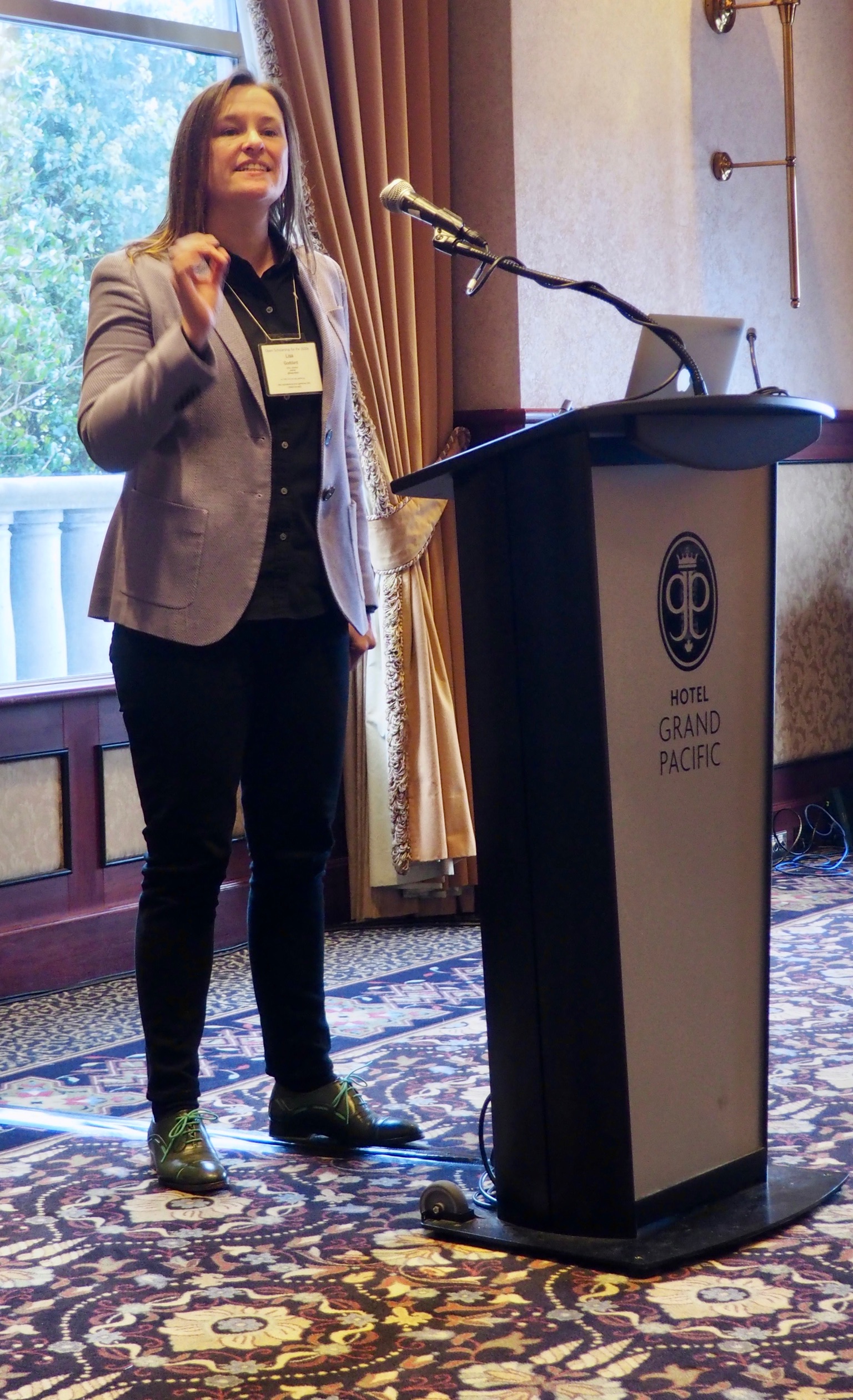
INKE January 2020 gathering, “Open Scholarship for the 2020s”
- Alyssa Arbuckle (UVic), “How Can We Broaden and Diversify Humanities Research Dissemination?”
- Jon Bath (U Saskatchewan), Michael Peterson (Void Gallery), and the SAEP Project Team, “Building with the Community: Developing the Saskatchewan Arts Engagement Platform”
- Constance Crompton (U Ottawa), “Linked Familiarity: Wikidata and Bartlett’s Familiar Quotations”
- Lisa Goddard (UVic), “Extending Library Infrastructure for Open Knowledge Creation”
- Susan Haigh (Canadian Association of Research Libraries), “Toward Open Scholarship at Scale: Key Initiatives in the Research Library Community”
- Rachel Hendery (Western Sydney U), “Lessons from the Living Lab”
- Richard Lane (Vancouver Island U), “Collaboration for Open Scholarship: Digitally Reconfiguring Access to the Canadian War Letters Project for Increased Community Engagement and Research”
- John W. Maxwell (Simon Fraser U), “Pop! A New Way to Think About Journal Publishing”
- Brian Owen (Simon Fraser U), “Community Infrastructure and Support – Local and Global”
- Rebecca Ross and Jason Friedman (Canadian Research Knowledge Network), “A Strategy for Open”
- Jon Saklofske (Acadia U), “Gaming the Industry: Exploring Diverse Open Scholarship Models in Digital Game Studies”
- Lynne Siemens (UVic), “Comparing and Contrasting the Partner and Academic Perspectives in Humanities-Based Industry-University Partnerships”
- Caroline Winter, Luis Meneses, Tyler Fontenot, Alyssa Arbuckle, and Ray Siemens (UVic) with the ETCL and INKE Research Groups, “Exploring the Possibilities of Digital Research Communities: The Canadian Humanities and Social Sciences Commons”
Previous INKE Partnership presentations (2008-2019): https://onlineacademiccommunity.uvic.ca/mcriinke/publications/